The Dance
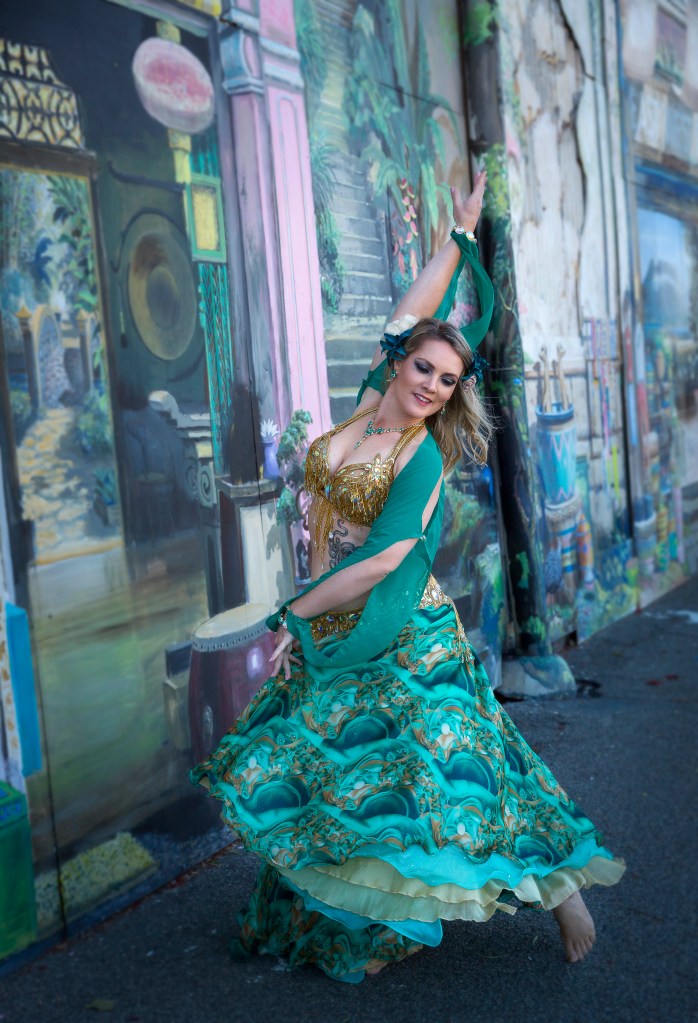
Bellydance, also known as Middle Eastern dance, has a rich cultural background that spans several centuries and various regions in the Middle East and northern Africa. The dance form is believed to have originated in ancient Egypt and spread to other countries in the region such as Turkey, Lebanon, and Persia. Historically bellydance was performed in social settings such as weddings, parties and festivals, and also as part of religious rituals and ceremonies. The dance was not only a form of entertainment but also a way for people to express emotions, tell stories and celebrate important events.
Compared to many western dance forms which focus on the movement of limbs and body through space, bellydance is driven by hip and torso articulation; as such, it’s a great way to increase balance, core strength and flexibility. The dance is often accompanied by traditional Middle Eastern music, which can include instruments such as the oud, tabla, and darbuka, and can be performed solo or in a group. The costuming and movement vocabulary vary depending on the region of influence, such as Egyptian, Lebanese, Turkish, and American Cabaret styles. Similarly, traditional or folkloric dance styles and costuming differ to the golden-era, modern, and fusion styles.
Fusion bellydance combines elements of Middle Eastern dance with other dance styles and influences from around the world. This can include elements of jazz, hip-hop, industrial, and contemporary dance, or the use of non-traditional props and Western music. Many fusion bellydancers are inspired by the idea of creating a dance that reflects the diverse cultural backgrounds of themselves and their audiences. Others just like to play with and combine various elements in the continued evolution of dance.

The Teacher

Andriya has been dancing and performing Middle Eastern Dance in various forms since 2003 when she started her first classes at Belly Dance Central. Shaheena has been pivotal to Andriya’s learning and performance journey, with her influence still felt in Andriya’s dancing and costuming style. Andriya’s learning opportunities and exposure to different styles and techniques started with world-class local teachers and have been bolstered by international artists from Egypt, Turkey, Europe, and the USA.
Having dipped her toes into most available forms of bellydance at various times, Andriya has found herself strongly drawn to Egyptian dance in its many styles and flavours. She also revels in theatrical dance styles and working with props – sword, cane, veil, zils, riq, shamadan, wings and voi – there aren’t many that she hasn’t had a play with or collected over the years. Par for the course, bellydance costuming needs have provided another creative outlet and area of skill development for Andriya to master.
Andriya’s general teaching and instructing experience spans more than 25 years, delivering a wide variety of content to students of all ages in many different environments. She has specialised in outdoor, recreational, and movement-based activities, which have since influenced her own performance and exercise choices. The love of learning and passing on knowledge to others is a driving force in her life.
 Andriya Dance